AI Labs

Research that keeps us ahead of generative fraud

Our AI Labs team continuously researches and benchmarks machine-learning models against the newest attack vectors. We study how synthetic media is created so we can reliably detect it — across deepfakes, liveness spoofing, and document tampering.

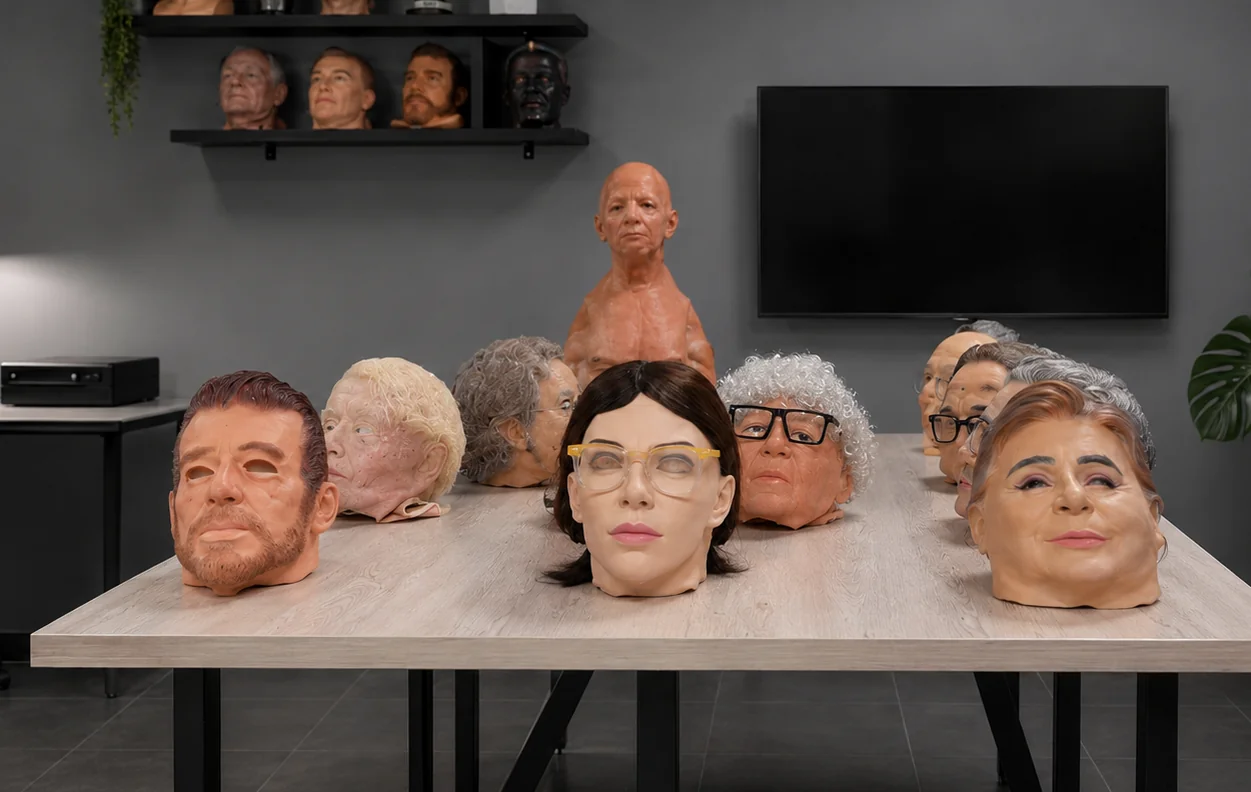
Image: face masks used in AI Labs liveness testing
Research Area 01

Liveness Detection

We study presentation attacks (printed photos, replayed video, 3D masks) and injection attacks (virtual cameras, emulators) to build passive and active liveness models. Every model is reported with measured FAR/FRR so security and conversion trade-offs are transparent.

  • Passive liveness that needs no user gestures, plus active challenge fallbacks
  • Injection-attack detection at the capture and transport layers
  • ISO/IEC 30107-3 aligned presentation attack detection testing
02

Deepfake Detection

We run adversarial research against the latest diffusion and GAN-based face generators. By reproducing how attackers synthesize and swap faces, we train classifiers that pick up the subtle frequency, texture, and lighting artifacts that generative models leave behind — even after compression and re-encoding.

  • Continuously updated corpus of synthetic faces from open and proprietary generators
  • Frequency-domain and spatial models combined for robust ensemble scoring
  • Evaluated against unseen generators to measure real-world generalization
03

Document Tampering & Modification

We apply pixel-level forensics to identity documents to surface splicing, copy-move edits, font substitution, and AI-inpainted fields. Models are trained on tampered samples we generate in-house so the detector sees the same techniques fraudsters use.

  • Error-level analysis and noise-residual models to expose edited regions
  • Font, MRZ, and template consistency checks across 150+ document types
  • Detection of AI-generated and AI-edited document fields
How we work

Our research methodology

Detection is a moving target. We treat it as a continuous loop rather than a one-time model release.

01

Threat replication

We reproduce emerging attacks in a controlled red-team environment.

02

Dataset curation

Balanced, consented datasets are built and versioned for each threat class.

03

Adversarial training

Models are hardened against the attacks our red team can produce.

04

Continuous retraining

Production signals feed back into the loop to keep models current.

Scale your onboarding.
Automate your compliance.

Stop choosing between high conversion rates and strict regulatory compliance. Unify your identity workflows, detect fraud in real-time, and give your users full control over their privacy.